Scientific observations and results from Antarctica shallbe exchanged and made freely available
This dataset provides gridded ice mass change data around the Thwaites Glacier, with a resolution of 1 km, from May 1992 to Jun 2026. The dataset was estimated merging the elevation change from Cryosat-2 swath processing and from ITS_Live multi-satellite elevation change data. Overview ------------------------------------------------------------------------------------------------------------------------------------ Data Format: MATLAB binary data container format (.mat) Coordinate System: Polar Stereographic South (Standard longitude = 0, standard latitude = -71) Spatial Resolution: 1 km (nominal) Temporal Resolution: Monthly Temporal Coverage: May 1992 - June 2026 Unit: m yr-1 and m w.e. yr-1 ------------------------------------------------------------------------------------------------------------------------------------
Variation of geomagnetic field measured from search-coil magnetometer (SCM) at Jang Bogo Station, Antarctica Study of the activity of ultra low frequency (ULF) wave in the southern high latitude
Electron density profile, plasma drift velocity, and ionospheric tile information measured from VIPIR (ionosonde) at Jang Bogo Station. Study of the ionospheric characteristics in the southern high latitude.
The dataset includes sedimentological, bulk geochemical, lipid biomarker, cutin acid, and lignin phenol data for core ARA01B-03MUC, as well as compiled published data for surface sediments and sediment cores from the Chukchi Sea shelf.
(1) Dataset Title WRSWeddellBioLog: A biologging dataset of Weddell seal movement and diving behavior in Terra Nova Bay, Ross Sea, Antarctica (2022–2025) (2) Purpose of Data Acquisition To compile, harmonize, quality-control, and publicly provide multi-year animal-borne biologging records from Weddell seals (Leptonychotes weddellii) in Terra Nova Bay, western Ross Sea, Antarctica. The dataset was designed to support studies of movement ecology, diving behavior, habitat use, predator–environment relationships, predator–sea-ice interactions, and future ecological and environmental assessments in the Ross Sea region. (3) Brief Description Austral-summer biologging surveys conducted between 2022 and 2025 collected location and dive records from Weddell seals inhabiting Terra Nova Bay, Ross Sea, Antarctica. A total of 52 seals, including 31 females and 21 males, were equipped with biologgers attached to the head or dorsal pelage. The deployed instruments comprised seven SPLASH10-F-393 tags and 19 SPLASH10-393 tags from Wildlife Computers, 17 F6G 376B tags from Lotek, and nine CTD-SRDL tags from SMRU Instrumentation. After logger-specific preprocessing, variable harmonization, data integration, and quality control, the final dataset contains 113,163 location records from 52 individuals and 50,633 dive-related records from 51 individuals. The dataset includes standardized Location and Dive records, logger-specific preprocessed files, quality-control flags and notes, and processing summaries documenting record counts at each stage. Users should note that F6G and CTD records represent individual dive events, whereas SPLASH10-F-393 and SPLASH10-393 records include daily maximum-depth summaries rather than individual dives. (4) Deposit Contents The deposit is organized by processing stage and data type. The “Lotek_preQC_csv” directory contains F6G data after logger-specific preprocessing prior to integrated quality control; each CSV file follows the naming convention “D{YYYY}_{instrument_ID}_preQC.csv”. The “Integrated_BioLog_csv” directory contains harmonized intermediate products, including “Location.csv”, “Dive.csv”, and “BioLog_LoadSummary.csv”. The “BioLog_QC_csv” directory contains final quality-controlled data products and summaries, including “Location_QC.csv”, “Dive_QC.csv”, “Location_QC_summary.csv”, and “Dive_QC_summary.csv”. Each quality-controlled record includes “QC_Flag” and “QC_Note” fields, allowing users to select records according to their analytical objectives and acceptable uncertainty levels. All time information is standardized to Coordinated Universal Time (UTC), and positional information is provided as latitude and longitude. (5) Keywords Weddell seal, Leptonychotes weddellii, biologging, telemetry, animal movement, diving behavior, movement ecology, habitat use, predator–environment relationship, sea ice, fast ice, polynya, Ross Sea, Terra Nova Bay, Antarctica, SPLASH10-F-393, SPLASH10-393, Lotek F6G, CTD-SRDL, Argos, Fastloc GPS, FastGPS (6) Spatial Extent Terra Nova Bay, western Ross Sea, Antarctica. Field deployments were conducted at several sites in Terra Nova Bay, including areas near Jang Bogo Station, Campbell Glacier Ice Tongue, Silverfish Bay, and Inexpressible Island. (7) Temporal Extent 2022–2025. Field deployments were conducted during the austral summer months of January and February. Logger transmission durations ranged from 2 to 309 days depending on logger type and deployment. (8) Data Formats CSV files for logger-specific preprocessed data, integrated and standardized data, final quality-controlled data, and quality-control summary files. The files are machine-readable and can be imported into Python, R, MATLAB, and other common data-analysis environments. Distribution as compressed archives may be used for KPDC deposit if required. (9) Licence, Access and Citation Terms - LICENCE The data in this record are released under the Creative Commons Attribution 4.0 International licence (CC BY 4.0, https://creativecommons.org/licenses/by/4.0/). Users are free to copy, redistribute, adapt, transform and build upon the material for any purpose, including commercially, provided that appropriate credit is given as specified below. The co-registration pipeline supplied in the same record is released under the MIT licence and covers the code only. - ATTRIBUTION IS MANDATORY Attribution is a condition of the CC BY 4.0 licence, not a courtesy. Any publication, report, presentation, derived dataset or product that uses these data — in whole, in part, cropped, resampled, reprojected or otherwise modified — must cite both items listed under Citation below. Users who modify the data must also state that changes were made, and must not imply endorsement by the data providers. - ACCESS PROCEDURE (managed separately from the licence) The dataset is planned for public release through the Korea Polar Data Center (KPDC). The official access procedure, including whether the files are open download or request-based, should be confirmed by KPDC upon registration. During manuscript review, the dataset may be provided through a temporary private repository, but the KPDC record and DOI should replace temporary access links after acceptance and official registration. - REQUESTED PRACTICE (a request, not a licence restriction) The licence governs what a user may do with the data once obtained; it does not mean the files download without checks. The record and its metadata are openly available, but the data files are marked "Request required" and must be requested through this record page. Requests are reviewed in consultation with the Principal Investigator, and applicants should state their name, affiliation and intended use. Users are encouraged to evaluate the metadata, logger type, temporal resolution, QC_Flag, and QC_Note fields before analysis. Because the dataset contains biologging records from instrumented Weddell seals rather than a complete population-level survey, users should consider sampling limitations related to Antarctic field logistics, seal accessibility, deployment opportunities, and instrument-specific performance. Users are also encouraged to contact the corresponding authors before undertaking analyses that require detailed knowledge of field conditions, deployment context, or logger-specific limitations. - DISCLAIMER The data are provided “as is”. Although the records were harmonized and subjected to quality-control procedures, users are responsible for determining whether the data are suitable for their specific analytical purposes. Location estimates, dive records, and satellite-derived environmental variables may contain uncertainty, particularly near coastlines, fast-ice edges, grounded icebergs, and small coastal polynyas. - CONTACT Jong-U Kim (wildlife@kopri.re.kr), Korea Polar Research Institute (KOPRI) Jinku Park (jinku_park@kopri.re.kr), Korea Polar Research Institute (KOPRI) - Citation If you use this dataset, please cite the dataset and the Data Descriptor: Oh, Y., Kim, J.-H., Kim, Y., Park, J. & Kim, J.-U. WRSWeddellBioLog: A biologging dataset of Weddell seal movement and diving behavior in Terra Nova Bay, Ross Sea, Antarctica (2022–2025). Korea Polar Data Center. DOI to be assigned. The Data Descriptor citation (Scientific Data) will be added to this record upon publication.
This is a **data product**; the scientific interpretation of the source families (marine air-gun survey contamination, a located glacial source at David Glacier, ocean/sea-ice and wind sources) is reported in the companion analysis paper (see *Related publications*).
King Sejong Station more infomation
Barton Peninsula, King George Island, AntarcticaJang Bogo Station more infomation
Terra Nova Bay, Northern Victoria Land, AntarcticaDasan Station more infomation
NyÅlesund, Norway, Europelast 5 years data
Since 2010
last 5 years data
Select a Circle or Square

Click the play button

On the map, click Set Area Center

Drag to adjust
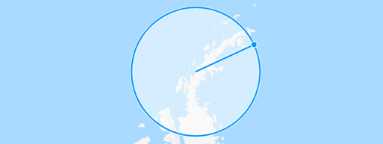
Click again to quit

Click the search button and you will only be able to search results within the area.
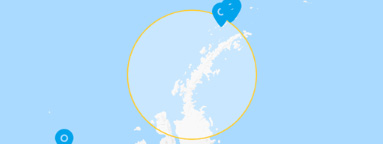
* Click the Stop button to cancel